Types of Manufacturers in the Clothing Industry: OEM vs ODM vs Ready-Stock
9/4/2025 • 12 min read
OVERVIEW
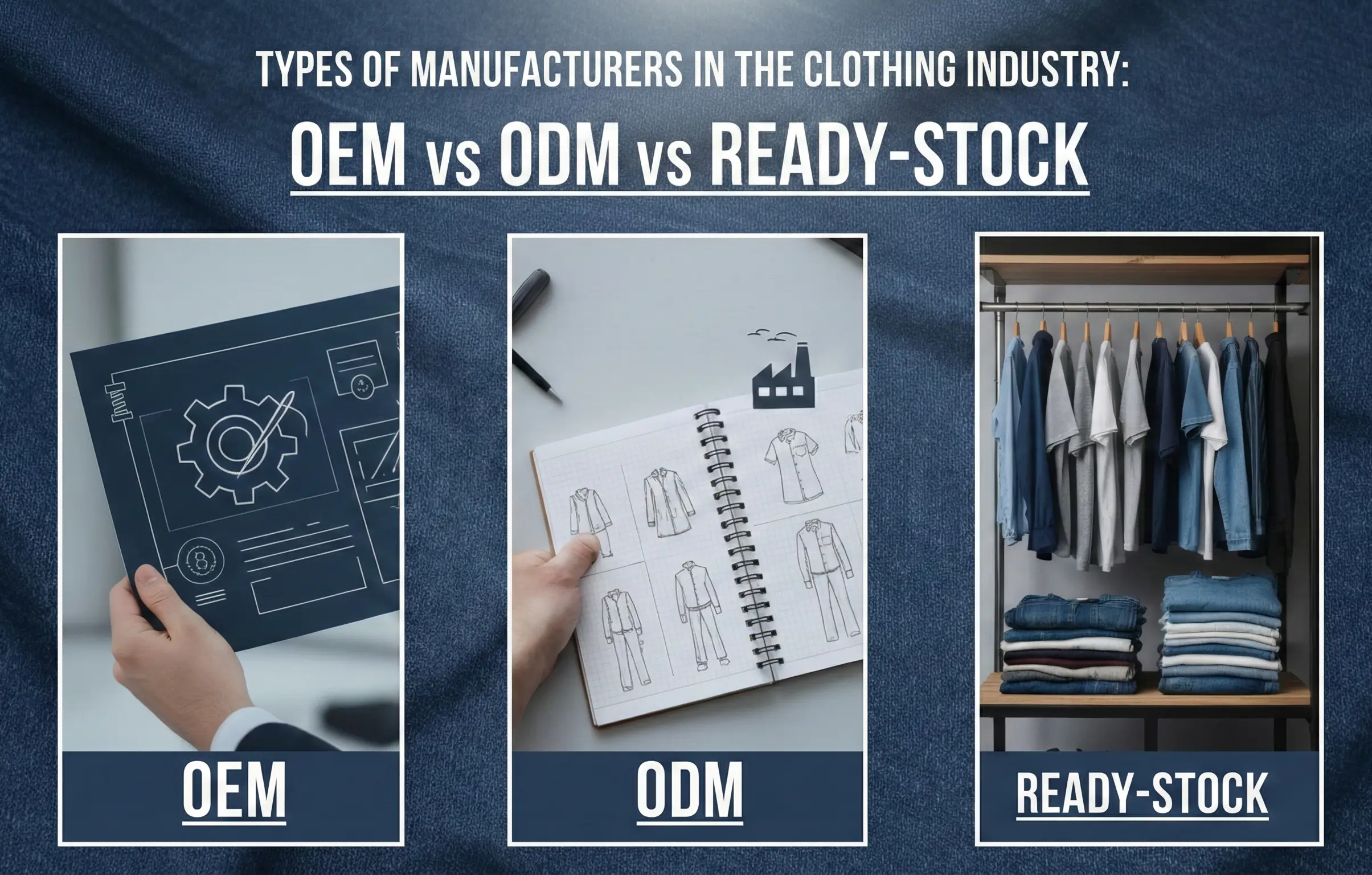
In the apparel business, manufacturers typically operate in three core models: OEM manufacturing (Original Equipment Manufacturer — make-to-order), ODM manufacturing (Original Design Manufacturer — design + production), and Ready-Stock manufacturing (also called stock-maintain). Understanding how these models work and when to use each directly impacts speed-to-market, margins, and inventory risk.
WHAT IS OEM (ORIGINAL EQUIPMENT MANUFACTURER)?
In OEM manufacturing, every style is made specifically for the client. You control design, fabric, trims, wash, fit, labels, and packaging. This is full custom/private label.
- Customization: 100% — tech packs, fabrics, and details as per your brief.
- MOQ: Higher, since fabric/trim procurement is specific to your order.
- Lead time: Longer due to sampling, sourcing, approvals, and production.
- Fit control: Highest; you own patterns and spec sheets.
- Branding: Your private label and packaging from day one.
- Design responsibility: Entirely yours — you supply the tech pack and specs.
WHAT IS ODM (ORIGINAL DESIGN MANUFACTURER)?
In ODM manufacturing, the manufacturer designs and develops the product, and you purchase it under your own brand name. The manufacturer handles design, R&D, sampling, and production — you bring the brand, marketing, and distribution.
- Customization: Moderate — you can tweak existing designs (fabric variants, wash, minor fit changes), but the core design is the manufacturer's.
- MOQ: Medium; lower than OEM since the manufacturer has pre-developed patterns and fabric sourcing in place.
- Lead time: Shorter than OEM; sampling is faster because the manufacturer already has base patterns and prototypes.
- Fit control: Shared — the manufacturer's design team handles primary fit development; you can request modifications.
- Branding: Your private label applied on a manufacturer-designed product.
- Design responsibility: The manufacturer's — ideal if you don't have an in-house design team.
OEM vs ODM: KEY DIFFERENCE
The core difference is who owns the design. In OEM, the brand provides the complete design and the manufacturer simply produces it. In ODM, the manufacturer owns the design and the brand purchases the right to sell it under their label. Think of OEM as "you design, they make" and ODM as "they design, they make, you sell."
WHAT IS READY-STOCK (STOCK-MAINTAIN)?
A Ready-Stock manufacturer keeps proven designs and size runs in inventory. Buyers select styles from this pool and place orders for instant or quick dispatch.
- Customization: Limited to white labeling — tags, stickers, and packaging can be changed to your brand.
- MOQ: Lowest and most flexible; easy to test new SKUs.
- Lead time: Shortest; often ship-ready or within a week.
- Assortment: Built around proven fits with reliable sell-through.
- Cash flow: Best; inventory turns faster and replenishment is simpler.
WHITE LABELING EXPLAINED
White labeling means the core garment design is fixed, but brand elements — neck labels, size stickers, barcodes, hangtags, and polybag/corrugation — are applied for your brand. It's the fastest way to go to market while maintaining a branded experience. White labeling is common in both ODM and Ready-Stock models.
WHICH IS MORE PROFITABLE?
- OEM: Highest per-piece margin potential due to full differentiation and premium positioning, but also higher capital lock-in (sampling, fabric MOQs) and greater demand risk.
- ODM: Good margins with lower design investment — you skip the cost of an in-house design team and sampling iterations. Risk is moderate because the manufacturer has already validated the design.
- Ready-Stock: Slightly lower margin per unit, but highest inventory turns, fewest write-offs, and best cash velocity. For many retailers, net profit can be strongest due to speed and repeatability.
Bottom line: If your brand has strong, unique IP and predictable sell-through, OEM yields premium margins. If you want branded products without design overhead, ODM is your sweet spot. If you prioritize speed, cash flow, and lower risk, Ready-Stock often wins on net profit.
WHICH ONE HAS A BIGGER MARKET?
- Ready-Stock serves the mass market and value segments with faster fashion cycles and replenishment. This is typically largest by volume.
- ODM serves the growing segment of D2C brands and new labels that want unique-looking products without a full design apparatus. This segment is rapidly expanding with the rise of e-commerce brands.
- OEM caters to brand-led and premium niches that demand unique fits, fabrics, or washes — smaller by volume, higher by ASP.
In women's denim bottomwear, trend and replenishment models favor Ready-Stock for scale. ODM is ideal for emerging brands scaling up. OEM shines where your brand story and fit IP justify a premium. If you're exploring how to launch, read our complete guide to starting a clothing brand in India.
HOW TO CHOOSE: A QUICK DECISION GUIDE
- Choose OEM if: you have an in-house design team, need unique styles, own fit blocks, plan larger MOQs, and have marketing to defend price.
- Choose ODM if: you want branded products with design support, don't have a full design team, want faster sampling than OEM, and need moderate MOQs.
- Choose Ready-Stock if: you want speed-to-market, the most flexible MOQs, proven fits, and the lowest inventory risk.
- Hybrid approach: Launch fast with Ready-Stock for sell-through data; layer in ODM for brand-exclusive designs; add OEM capsules for full differentiation once demand is validated.
PRACTICAL COMPARISON
- Lead Time: Ready-Stock (days) → ODM (1–3 weeks) → OEM (4–8 weeks).
- MOQ: Ready-Stock (lowest) → ODM (medium) → OEM (highest).
- Design Control: OEM (full) → ODM (shared/tweaks) → Ready-Stock (none, white label only).
- Fit Control: OEM highest; ODM moderate; Ready-Stock relies on manufacturer's proven patterns.
- Branding: OEM full custom; ODM private label on manufacturer design; Ready-Stock via white labeling.
- Working Capital: Ready-Stock lightest → ODM moderate → OEM heaviest due to custom procurement.
- Design Team Needed: OEM (yes, mandatory) → ODM (optional) → Ready-Stock (no).
WHEN TO MIX ALL THREE MODELS
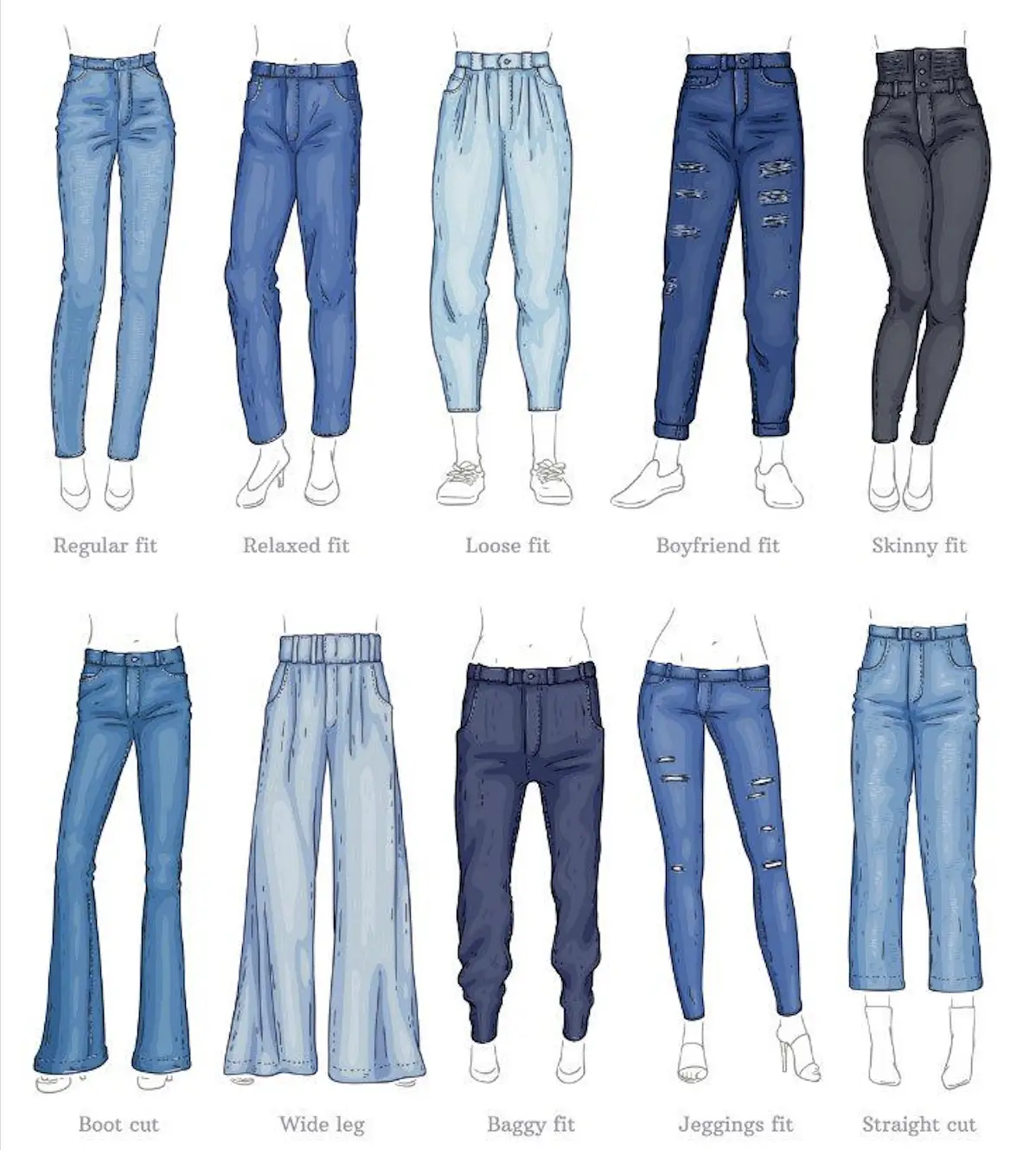
- Use Ready-Stock for core sizes and fast movers (e.g., Straight, Slim, jeggings) — maximum cash velocity.
- Use ODM for seasonal trend pieces and brand-exclusive designs without the overhead of a full design team.
- Use OEM for hero capsules, seasonal campaigns, and retailer exclusives where full design IP matters.
- Reinvest profits from Ready-Stock into ODM/OEM development once your demand curve is clear.
LP CREATION: OUR MODEL
LP Creation manufactures across OEM, ODM, and Ready-Stock in women's denim bottomwear. We primarily operate Ready-Stock to enable faster launches and weekly replenishment, support ODM for brands that want design-backed products without building an in-house team, and offer OEM for brands that need full custom control over design, fabric, wash, and trims.
- Ready-Stock: Proven fits, low friction onboarding, white labeling (tags/branding), and quick dispatch. Typical MOQ ~500 pcs.
- ODM: Manufacturer-designed styles with your branding — choose from our design library or request tweaks. Typical MOQ ~700 pcs.
- OEM: Full private label — sampling, spec ownership, and custom washes. Typical MOQ ~1000 pcs.
- Operations: Based in Mumbai; pan-India shipping; strict QC and size-run consistency.
Not sure which route fits your brand? We'll map OEM, ODM, or Ready-Stock to your budget, timelines, and target customer.